

ABOUT US
The Athletic Training program at the University of Miami (UM) is a graduate professional program accredited by the Commission on Accreditation of Athletic Training Education (CAATE). The program is designed to provide a structured classroom and clinical experience to prepare students to become eligible to sit for the Board of Certification exam.
The University of Miami is currently accredited by the Commission on Accreditation of Athletic Training Education (CAATE), 6850 Austin Center Blvd., Suite 100, Austin, TX 78731-3101. The next comprehensive review will occur in the 2028–2029 academic year.
VISION
MISSION
PROGRAM GOALS


GUIDELINES MANUAL
The Athletic Training M.S.AT. Guidelines Manual provides comprehensive program policies, procedures, and expectations. Please review the manual prior to enrollment.

Athletic Training Curriculum
CLASS OF 2028 AND BEYOND
Clinical Education
CLASS OF 2028 AND BEYOND
Clinical Rotation Affiliates
Professional Affiliates














College & University Affiliates


















Hospital & Clinic Affiliates



High School Affiliates









Cost & Funding
GRADUATE ASSISTANTSHIP BENEFIT
50% Tuition Waiver
Tuition & Fees
Additional costs may include textbooks, clinical materials, CPR certification, Complio compliance fees, and required health screenings.
Financial Aid & Funding
Immunization & Vaccination
The Student Health Center provides primary and specialty care as well as pharmacy services for all eligible students. The Health Center offers vaccinations, like the flu shot and TB, throughout the year for all students. University insurance plan information is also available at the center. Appointments are not necessary, but may be made at mystudenthealth, and many of the services are free of charge.
Required Immunizations
Quick Checklist
Student Health Center
5555 Ponce de Leon Blvd., Coral Gables
305-284-9100
studenthealth@miami.edu

APPLY NOW
Applications are reviewed on a rolling basis. Prospective students are encouraged to apply early, as seats are limited.

Technical Standards
Athletic Training education requires that the accumulation of scientific knowledge be accompanied by the simultaneous acquisition of skills and professional attitudes and behavior. Candidates for the MSAT degree must have abilities and skills in five areas:

Observation
The candidate must be able to observe demonstrations and participate in didactic and simulated learning opportunities. A candidate must be able to observe a patient accurately at a distance and close at hand, using functional senses of vision, audition, olfaction, and palpation with or without assistive devices.

Communication
Candidates must communicate effectively in English in clinical and classroom settings, elicit information from patients, perceive nonverbal communications, and communicate effectively with coaches, administrators, patients and their families, and all members of the health care team.

Motor
Candidates should have sufficient motor function to perform physical examinations, execute emergency care (CPR, AED, airway management, fracture stabilization), apply taping/bracing, and must be able to lift approximately 40 pounds. Both gross and fine muscular movements are required.

Conceptual-Integrative
These abilities include measurement, calculation, reasoning, analysis, synthesis, and retention of complex information. The candidate should be able to comprehend three-dimensional relationships and understand the spatial relationships of structures.

Behavioral / Social Attitudes
Candidates must possess the emotional health required for full use of their intellectual abilities, the exercise of good judgment, and the ability to develop mature, sensitive, and effective relationships with patients. They must tolerate physically-taxing workloads, function effectively under stress, adapt to changing environments, and display compassion, integrity, and interpersonal skill.
Important Notice:
Completion of the program's technical standards does not guarantee a student's eligibility for the Board of Certification (BOC) exam. Students requesting accommodation must contact the Office of Disability Services prior to the start of the program or immediately upon a change in health status.
All students are held to the technical standards and asked to review and sign upon enrollment. These are considered fundamental skills for the degree and cannot be waived, even in the presence of a documented disability. All accommodations determined reasonable by the Office of Disability Services are adhered to by faculty; accommodations are not awarded retroactively.
Faculty
Athletic Training education requires that the accumulation of scientific knowledge be accompanied by the simultaneous acquisition of skills and professional attitudes and behavior. Candidates for the MSAT degree must have abilities and skills in five areas:
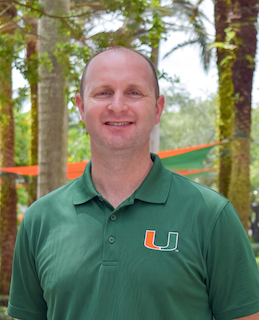
Aaron Sinnott
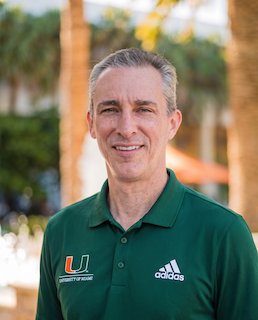
Kevin A Jacobs

Kysha Harriell
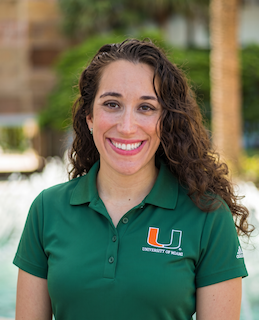
Maggie Aldousany
Associate Chair of the Kinesiology department
m.aldousany@umiami.edu

Taylor Wilmoth
Adjuncts
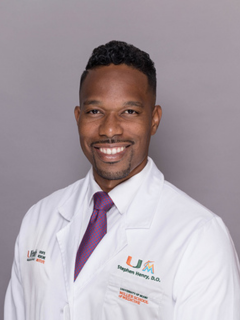
Stephen Henry

Luis Feigenbaum
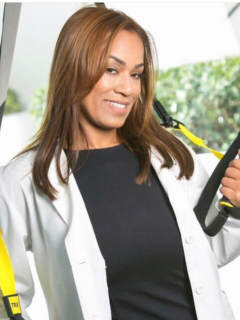
Sasha Torres
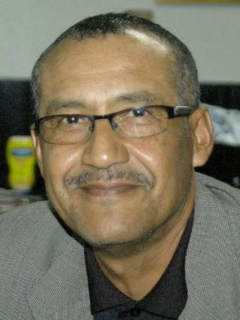
Frank Walters
PROGRAM DIRECTOR
M.S.AT. Program Director
Department of Kinesiology & Sport Sciences School of Education and Human Development University of Miami
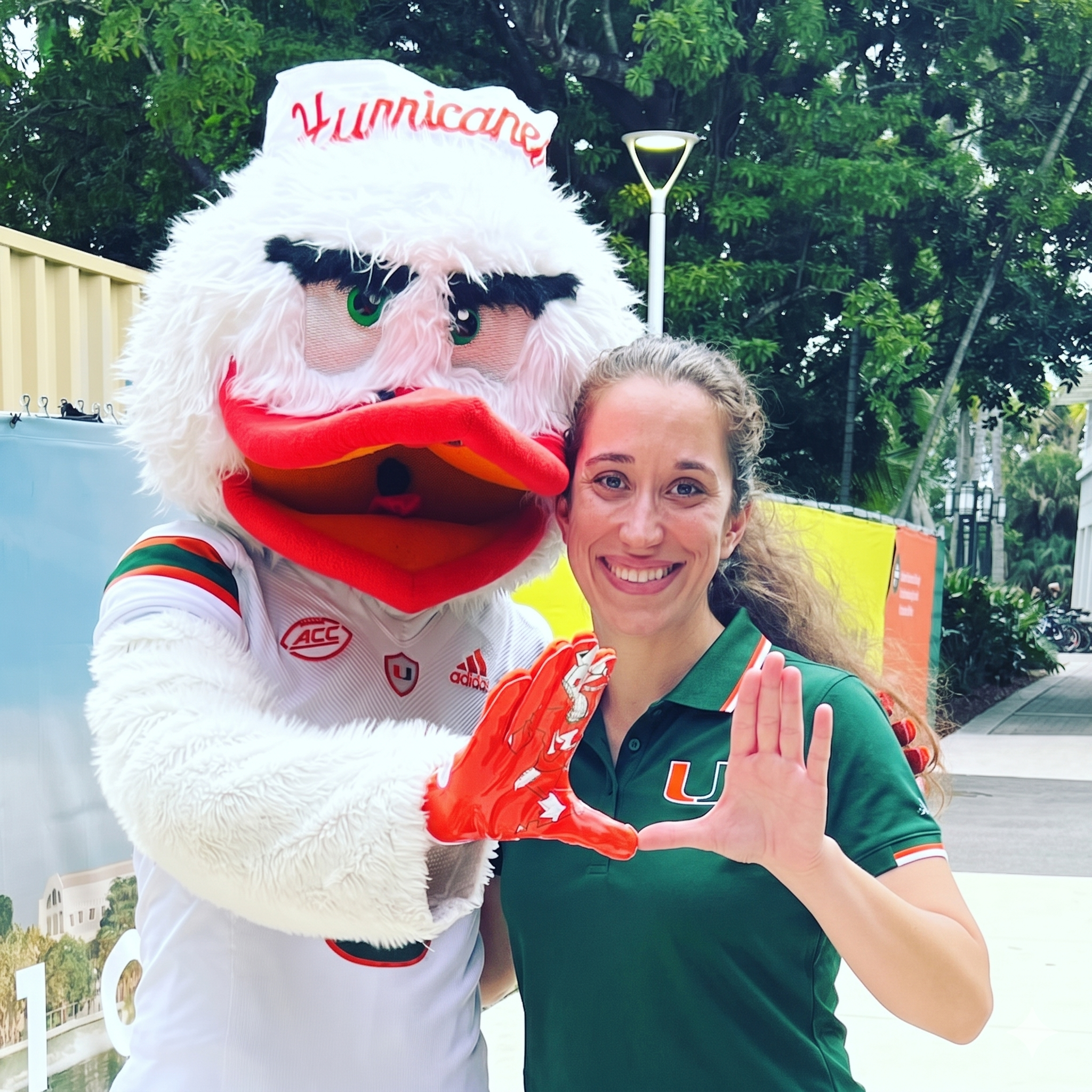
Dr. Maggie Aldousany
Program Director
Associate Professor of Professional Practice
Associate Chair of the Kinesiology department
m.aldousany@umiami.edu